



Connect Customer.io and Looker Studio (Google Data Studio)
Integrate Customer.io with Looker Studio (Google Data Studio) to automate workflows, sync data between apps, and eliminate repetitive tasks with AI-powered automation.
Search Asset in Looker when Customer Events from Customer.io
List Asset Permissions in Looker when Customer Events from Customer.io
Add members to Looker Studio asset in Looker Studio when Customer Events from Customer.io
Search Asset in Looker when Email Events in Customer
List Asset Permissions in Looker when Email Events in Customer
Popular Customer.io + Looker Studio (Google Data Studio) flows
Start from a real workflow other teams are already running.
Choose a trigger
Customer.io
When this happens...
Customer Events
Email Events
In-app Message Events
Push Events
SMS Events
Slack Events
Choose an action
Looker Studio (Google Data Studio)
Automatically do this!
Search Asset
List Asset Permissions
Add members to Looker Studio asset
Search Asset in Looker when Customer Events from Customer.io
Use this flowList Asset Permissions in Looker when Customer Events from Customer.io
Use this flowAdd members to Looker Studio asset in Looker Studio when Customer Events from Customer.io
Use this flowSearch Asset in Looker when Email Events in Customer
Use this flowList Asset Permissions in Looker when Email Events in Customer
Use this flowAdd members to Looker Studio asset in Looker Studio when Email Events in Customer
Use this flowSearch Asset in Looker when In-app Message Events in Customer
Use this flowList Asset Permissions in Looker when In-app Message Events in Customer
Use this flowAdd members to Looker Studio asset in Looker Studio when In-app Message Events in Customer
Use this flowSearch Asset in Looker when Push Events in Customer
Use this flowSupported Triggers & Actions
Everything you can automate between Customer.io and Looker Studio (Google Data Studio).
When this happensTriggers
A trigger is an event that starts a workflow.
Customer Events
Triggers when Events are performed on customer
Email Events
Triggers when Events are performed on Email.
In-app Message Events
Triggers when Events are performed on messages.
Push Events
Triggers when a push notification is drafted.
SMS Events
Trigger when an SMS delivery event happens (e.g., sent, delivered, failed, opened, clicked).
Slack Events
Triggers when a slack message is drafted, attempted, sent, clicked, failed or undelivered.
Do thisActions
Action is the task that follows automatically within your Customer.io integrations.
List campaigns
Returns a list of all of your collections, including the name and schema for each collection.
Create manual segment
Create a manual segment with a name and a description. This request creates an empty segment
Delete a segment
Delete a manual segment.
Search Asset
Search a user's Looker Studio assets.
List Asset Permissions
Retrieves a list of permissions for a given Looker Studio asset.
Add members to Looker Studio asset
Give one or more people, groups, or domains a Viewer, Editor, Owner, or link role on a Looker Studio asset.
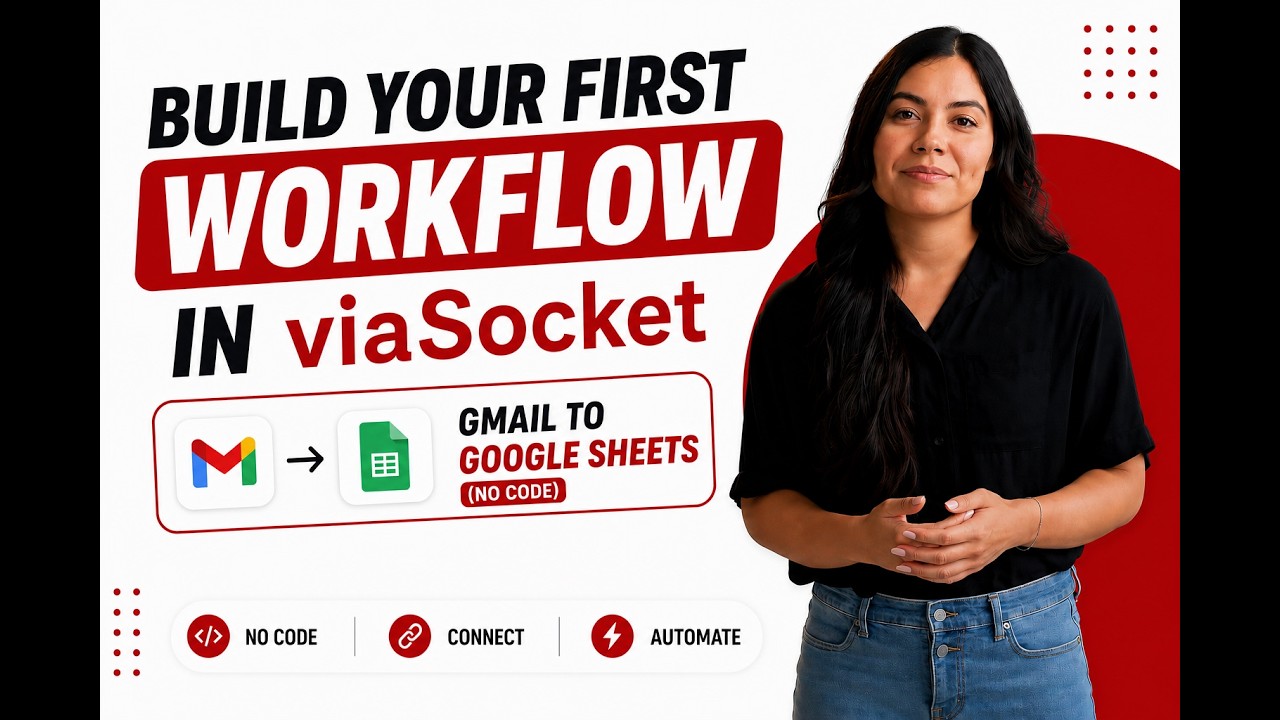
Learn how to build your first workflow
Follow a simple walkthrough to create, test, and launch your first automation.
- 1
Connect your apps
Link the apps you want to automate.
- 2
Configure your workflow
Set up triggers, actions, and map your data.
- 3
Test & publish
Test your workflow and publish it.
Trusted by Thousands. Recognized by the Best.
Recognized by leading review platforms and trusted by 10,000+ businesses worldwide.


From idea to automation.
AI will build it for you
Just describe the task in plain English. viaSocket AI selects the right apps, builds the workflow, maps the fields, and prepares everything for review before you publish.
Learn More About Automation

How viaSocket Works | A Complete Guide
Discover viaSocket, an AI-powered workflow automation platform with 2,300+ integrations. Learn what it is, how it works, and how to set up no-code automated workflows.

5 Simple Automation Hacks to Make Your Team Free
Five practical automation hacks to cut repetitive tasks and boost productivity using viaSocket, covering lead generation, onboarding, accounting, support, and HR.

What is Workflow Automation - Definition, Importance & Benefits | A Complete Guide
Explore workflow automation: its definition, benefits, how it works, real-world examples, and how to automate with viaSocket.
What are Webhooks - Definition, Working, Usage & Examples | A Complete Guide
Discover what webhooks are, how they work, and when to use them. Compare push-based webhooks with APIs and polling, with practical examples and ViaSocket integration.
viaSocket Support
We're here to help

Instant answers
AI assistant available 24/7
Expert support
Connect with our specialists
Trusted & secure
Your data is safe with us
Start automating Customer.io and Looker Studio (Google Data Studio) free
No credit card required. Set up your first workflow in minutes.
About Customer.io
Customer.io is a versatile marketing automation platform designed to help businesses create, send, and optimize targeted email campaigns. It enables users to engage with their audience through personalized messaging and automated workflows, ensuring effective communication and improved customer relationships.
Learn moreSimilar apps


About Looker Studio (Google Data Studio)
Looker is a powerful business intelligence and data analytics platform that helps organizations explore, analyze, and share real-time business insights. It provides a user-friendly interface for creating data-driven reports and dashboards, enabling data teams to collaborate effectively and make informed decisions.
Learn moreSimilar apps






Frequently Asked Questions
Sign up for a free viaSocket account, then authorize both your Customer.io and Looker Studio (Google Data Studio) accounts. From there, pick a trigger in one app and an action in the other. Your first workflow can be live in under five minutes.
Yes. viaSocket uses instant triggers where available, so data moves between Customer.io and Looker Studio (Google Data Studio) as soon as the event happens. Scheduled polling triggers run at a maximum interval of 15 minutes.
Yes. You can map specific fields, apply filters to skip records that do not match your conditions, and transform values before they reach Looker Studio (Google Data Studio). No coding required.
Yes. You can set up a workflow where Customer.io triggers actions in Looker Studio (Google Data Studio), and a separate workflow where Looker Studio (Google Data Studio) triggers actions in Customer.io. Both run independently and in real time.
viaSocket logs every run so you can see exactly what succeeded and what failed. Failed tasks can be retried from the dashboard without re-configuring the workflow.
Yes, there is a free plan that covers basic workflows between Customer.io and Looker Studio (Google Data Studio). Paid plans unlock higher task limits, faster polling, and advanced features like multi-step workflows and conditional logic.
No. The entire Customer.io and Looker Studio (Google Data Studio) integration is built through a visual, point-and-click interface. Code blocks are available if you want them, but they are never required.

