



Connect Zoom for development and Generatebanners
Integrate Zoom for development with Generatebanners to automate workflows, sync data between apps, and eliminate repetitive tasks with AI-powered automation.
Search Templates in Generatebanners when New Recording Completed in Zoom for Development
Create an Image in Generatebanners when New Recording Completed in Zoom for Development
Create a Set of Images in Generatebanners when New Recording Completed in Zoom for Development
Search Templates in Generatebanners when New Meeting Started in Zoom for development
Create an Image in Generatebanners when New Meeting Started in Zoom for development
Popular Zoom for development + Generatebanners flows
Start from a real workflow other teams are already running.
Choose a trigger
Zoom for development
When this happens...
New Recording Completed
New Meeting Started
Webinar Ends
Meeting Participant Left
Participant Leaves Webinar
New User Created
Choose an action
Generatebanners
Automatically do this!
Search Templates
Create an Image
Create a Set of Images
Search Templates in Generatebanners when New Recording Completed in Zoom for Development
Use this flowCreate an Image in Generatebanners when New Recording Completed in Zoom for Development
Use this flowCreate a Set of Images in Generatebanners when New Recording Completed in Zoom for Development
Use this flowSearch Templates in Generatebanners when New Meeting Started in Zoom for development
Use this flowCreate an Image in Generatebanners when New Meeting Started in Zoom for development
Use this flowCreate a Set of Images in Generatebanners when New Meeting Started in Zoom for development
Use this flowSearch Templates in Generatebanners when Webinar Ends in Zoom for Development
Use this flowCreate an Image in Generatebanners when Webinar Ends in Zoom for Development
Use this flowCreate a Set of Images in Generatebanners when Webinar Ends in Zoom for Development
Use this flowSearch Templates in Generatebanners when Meeting Participant Left in Zoom for Development
Use this flowSupported Triggers & Actions
Everything you can automate between Zoom for development and Generatebanners.
When this happensTriggers
A trigger is an event that starts a workflow.
New Recording Completed
Runs when a new recording is completed.
New Meeting Started
Runs when a new meeting starts in this Zoom account.
Webinar Ends
Runs when a webinar ends for the connected Zoom account.
Meeting Participant Left
Runs when a participant leaves a meeting for the connected Zoom account.
Participant Leaves Webinar
Runs when participant leaves a webinar for the connected Zoom account.
New User Created
Runs when a new user is created in the connected Zoom account.
Do thisActions
Action is the task that follows automatically within your Zoom for development integrations.
Create Webinar
Create a webinar with a host, topic, schedule (one-time or recurring), and configurable settings.
Get Meeting Recordings
Retrieve recordings for a chosen meeting; optionally include a download access token and TTL.
Get Meeting or Webinar Summary
Retrieve the AI Companion summary for a meeting or webinar using its UUID.
Update Webinar
Update a scheduled webinar or one occurrence using partial fields and advanced Zoom webinar settings.
Delete Webinar
Delete a webinar by its ID, with optional occurrence and notification options.
List Webinars
List webinars for a selected host, with optional filters for type, page size, and events.
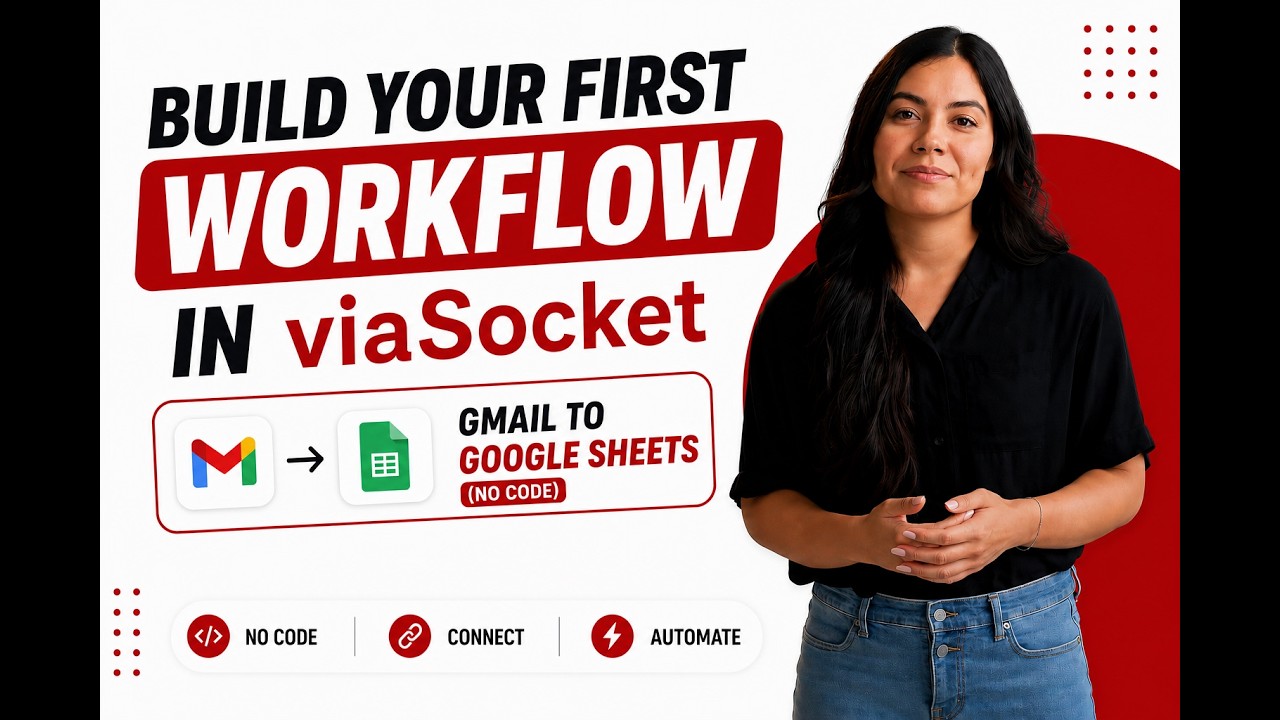
Learn how to build your first workflow
Follow a simple walkthrough to create, test, and launch your first automation.
- 1
Connect your apps
Link the apps you want to automate.
- 2
Configure your workflow
Set up triggers, actions, and map your data.
- 3
Test & publish
Test your workflow and publish it.
Trusted by Thousands. Recognized by the Best.
Recognized by leading review platforms and trusted by 10,000+ businesses worldwide.




From idea to automation.
AI will build it for you
Just describe the task in plain English. viaSocket AI selects the right apps, builds the workflow, maps the fields, and prepares everything for review before you publish.
Learn More About Automation
How viaSocket Works | A Complete Guide
Discover viaSocket, an AI-powered workflow automation platform with 2,300+ integrations. Learn what it is, how it works, and how to set up no-code automated workflows.

5 Simple Automation Hacks to Make Your Team Free
Five practical automation hacks to cut repetitive tasks and boost productivity using viaSocket, covering lead generation, onboarding, accounting, support, and HR.
What is Workflow Automation - Definition, Importance & Benefits | A Complete Guide
Explore workflow automation: its definition, benefits, how it works, real-world examples, and how to automate with viaSocket.
What are Webhooks - Definition, Working, Usage & Examples | A Complete Guide
Discover what webhooks are, how they work, and when to use them. Compare push-based webhooks with APIs and polling, with practical examples and ViaSocket integration.
viaSocket Support
We're here to help

Instant answers
AI assistant available 24/7
Expert support
Connect with our specialists
Trusted & secure
Your data is safe with us
Start automating Zoom for development and Generatebanners free
No credit card required. Set up your first workflow in minutes.
About Zoom for development
API and integration access for Zoom in development environments to schedule, join, and manage meetings.
Learn moreSimilar apps









About Generatebanners
Generatebanners is a platform that specializes in creating custom banners for various purposes, including marketing, events, and online promotions. It offers tools and templates to design visually appealing banners that can enhance brand visibility and engagement.
Learn moreFrequently Asked Questions
Sign up for a free viaSocket account, then authorize both your Zoom for development and Generatebanners accounts. From there, pick a trigger in one app and an action in the other. Your first workflow can be live in under five minutes.
Yes. viaSocket uses instant triggers where available, so data moves between Zoom for development and Generatebanners as soon as the event happens. Scheduled polling triggers run at a maximum interval of 15 minutes.
Yes. You can map specific fields, apply filters to skip records that do not match your conditions, and transform values before they reach Generatebanners. No coding required.
Yes. You can set up a workflow where Zoom for development triggers actions in Generatebanners, and a separate workflow where Generatebanners triggers actions in Zoom for development. Both run independently and in real time.
viaSocket logs every run so you can see exactly what succeeded and what failed. Failed tasks can be retried from the dashboard without re-configuring the workflow.
Yes, there is a free plan that covers basic workflows between Zoom for development and Generatebanners. Paid plans unlock higher task limits, faster polling, and advanced features like multi-step workflows and conditional logic.
No. The entire Zoom for development and Generatebanners integration is built through a visual, point-and-click interface. Code blocks are available if you want them, but they are never required.

