

Integrate Slack and PrintNode with viaSocket
Slack already connects with hundreds of apps. PrintNode's automation is still on its way. Want to speed that up?
Supported Triggers & Actions
Everything you can automate between Slack and PrintNode.
When this happensTriggers
A trigger is an event that starts a workflow.

New Message in Channels
Polls the selected Slack channels on every run and fires once per new message posted since the previous poll, newest first, each with the sender's username added and the channel ID in channel. Includes bot messages; thread replies, edits and join/leave notices are not included. Reads at most 200 messages per channel per run; no new messages gives an empty list. Note: the connected account must be a member of each channel, and a channel it cannot read is skipped without an error.
New User Joined or Updated in Your Org
Polls Slack and fires once per user whose profile was created or changed since the previous poll (new members, profile edits, deactivations), newest first, filtered by User Filter. Returns an array of users with the chosen fields; no matching users gives an empty list. A Slack error is thrown. Note: Slack bumps a user's updated time on any profile change, so existing users fire again when they edit their profile; the window is the poll interval (15 minutes if none is given).
New Message on Slack
Runs when a new message is posted in any channel or direct message of the connected workspace. It polls: thread replies, edits and bot or system messages are not included. Note: each poll joins the public channels it reads.
New Thread Message
Polls a Slack channel and fires once per new thread reply since the previous poll: replies in any thread of the channel, or only in the thread of the selected parent message. Each result is the reply (user, text, ts, thread_ts) plus channel and parent_message_text, the text of the thread's parent. Without a parent message, threads are found in the channel's 200 most recent messages; no new replies gives an empty list. Note: the connected account must be a member of the channel; a Slack error such as not_in_channel or channel_not_found is thrown. For instant delivery use New Thread Message Instant.
New member join/leave or updated in channel
Polls the selected Slack channels and returns one item per event, newest first: a member who joined (subtype channel_join) or left (channel_leave) and, when enabled, a member whose profile changed (profile_updated). Each item holds the Slack user's fields plus the channel id. Public channels the connected account is not in are joined automatically so their history can be read.
New Mention
Polls the chosen Slack channels on every run and fires once per new message or thread reply that mentions any Slack user (a <@U...> mention), not only the connected account. Each item has message_text, mentioned_user_ids, sender_user_id, channel_id, channel_name, channel_type, message_timestamp, thread_ts, is_thread_reply and message_link; no new mentions gives an empty list. A Slack error is thrown. Note: the connected account must be a member of each channel (others are skipped); a reply is found only when its parent message is also in the poll window; join notices such as '<@U...> has joined the channel' count as mentions, so filter on mentioned_user_ids and message_text.
Do thisActions
Action is the task that follows automatically within your Slack integrations.
Send Message
Posts a message to one or more channels, sends it as a direct message to one or more users, or replies inside a thread, now or at a scheduled time. Channel names and IDs both work. Returns Slack's response: one object for a single target, an array for several; a scheduled send returns a scheduled_message_id. A failure such as an unknown channel or missing access throws Slack's error code.
Send Interactive Message
Posts a message to a Slack user (direct message) or channel with either action buttons (Send Action Button) or one button that opens a form you describe as Block Kit JSON (Submit a Form), now or scheduled. Send now returns the channel and message ts (buttons: block_actions shape with the buttons list; form: view_submission shape with the form fields); scheduled returns scheduled_message_id and post_at. Fails with Slack's error (for example channel_not_found) if the post is rejected.
Send Block/buttons/Intractive message using AI
Posts a Slack message built from a Block Kit JSON string (sections, buttons, forms) to one channel as the connected account. Only the blocks array is sent, with no plain-text fallback. Returns Slack's response (ok, channel id, ts of the posted message, message); any Slack error, such as not_in_channel or invalid_blocks, is thrown as an error. Note: this action only posts the message; it does not read button clicks or form replies.
Open Modal with Block Kit JSON
Open a Slack modal from Block Kit JSON, using the trigger_id of a live Slack interaction; it expires after 3 seconds.
Update Message by Timestamp
Replaces the text, and the blocks when Message Blocks is given, of an existing Slack message found by channel and timestamp. Only messages posted by this connection's app or user can be updated. Returns Slack's response (ok, channel, ts, text, message); a Slack error such as message_not_found or cant_update_message fails the step.
Send Message as Thread
Posts a reply inside an existing Slack thread, now or at a scheduled Unix time, with an optional bot name and icon. Returns Slack's response ({ ok, channel, ts, message }), or { ok, channel, scheduled_message_id, post_at } when scheduled; a Slack error such as channel_not_found or thread not found is thrown as an error. Link previews are never expanded.
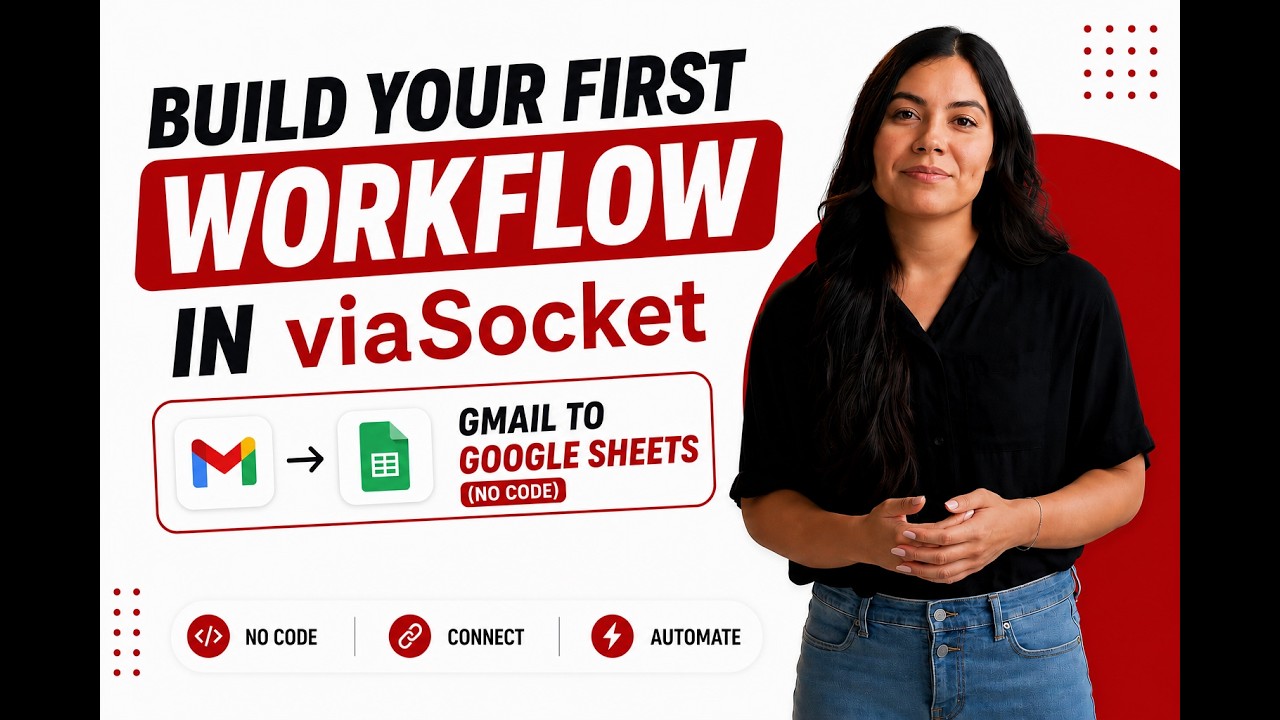
Learn how to build your first workflow
Follow a simple walkthrough to create, test, and launch your first automation.
- 1
Connect your apps
Link the apps you want to automate.
- 2
Configure your workflow
Set up triggers, actions, and map your data.
- 3
Test & publish
Test your workflow and publish it.
Trusted by Thousands. Recognized by the Best.
Recognized by leading review platforms and trusted by 10,000+ businesses worldwide.


From idea to automation.
AI will build it for you
Just describe the task in plain English. viaSocket AI selects the right apps, builds the workflow, maps the fields, and prepares everything for review before you publish.
Learn to build automation
Step-by-step video tutorials to help you connect apps, automate workflows, and save time.
Learn how to automate Slack and PrintNode workflows.
Learn how to automate Slack and PrintNode workflows.
Learn how to automate Slack and PrintNode workflows.
Learn how to automate Slack and PrintNode workflows.
Learn how to automate Slack and PrintNode workflows.
Learn More About Automation
Integrating Typeform and Slack for Seamless Communication
Learn to integrate Typeform with Slack for efficient communication. Streamline your processes and boost team productivity with our comprehensive guide.
How to Integrate HubSpot Forms with Slack for Instant Alerts
Learn the step-by-step process to connect HubSpot Forms with Slack for immediate alerts. Streamline your communication and never miss important updates.
Automate Teamwork.com with Slack, Google Sheets & Email -Powered by viaSocket
Connect Teamwork.com with Slack, Google Sheets, and email using viaSocket to trigger real-time notifications, auto-create tasks from external requests, sync live reports, and automate client updates, deadlines, onboarding, and billing.

How viaSocket Works | A Complete Guide
Explore viaSocket, a no-code AI-powered automation platform that connects 2,000+ apps to automate repetitive tasks. Learn how it works, set up triggers and actions, and start automating your day.
viaSocket Support
We're here to help

Instant answers
AI assistant available 24/7
Expert support
Connect with our specialists
Trusted & secure
Your data is safe with us
Start automating Slack and PrintNode free
No credit card required. Set up your first workflow in minutes.
About Slack
Slack is an AI-powered work platform for team communication, collaboration, project coordination, and workflow automation. It helps organizations centralize conversations, share files, manage channels, and integrate tools to keep work moving in one place.
Learn more
About PrintNode
PrintNode is a cloud printing service that lets you send and manage print jobs from applications and workflows using connected printers.
Learn more


Frequently Asked Questions
Sign up for a free viaSocket account, then authorize both your Slack and PrintNode accounts. From there, pick a trigger in one app and an action in the other. Your first workflow can be live in under five minutes.
Yes. viaSocket uses instant triggers where available, so data moves between Slack and PrintNode as soon as the event happens. Scheduled polling triggers run at a maximum interval of 15 minutes.
Yes. You can map specific fields, apply filters to skip records that do not match your conditions, and transform values before they reach PrintNode. No coding required.
Yes. You can set up a workflow where Slack triggers actions in PrintNode, and a separate workflow where PrintNode triggers actions in Slack. Both run independently and in real time.
viaSocket logs every run so you can see exactly what succeeded and what failed. Failed tasks can be retried from the dashboard without re-configuring the workflow.
Yes, there is a free plan that covers basic workflows between Slack and PrintNode. Paid plans unlock higher task limits, faster polling, and advanced features like multi-step workflows and conditional logic.
No. The entire Slack and PrintNode integration is built through a visual, point-and-click interface. Code blocks are available if you want them, but they are never required.

