
Blog
 Latest
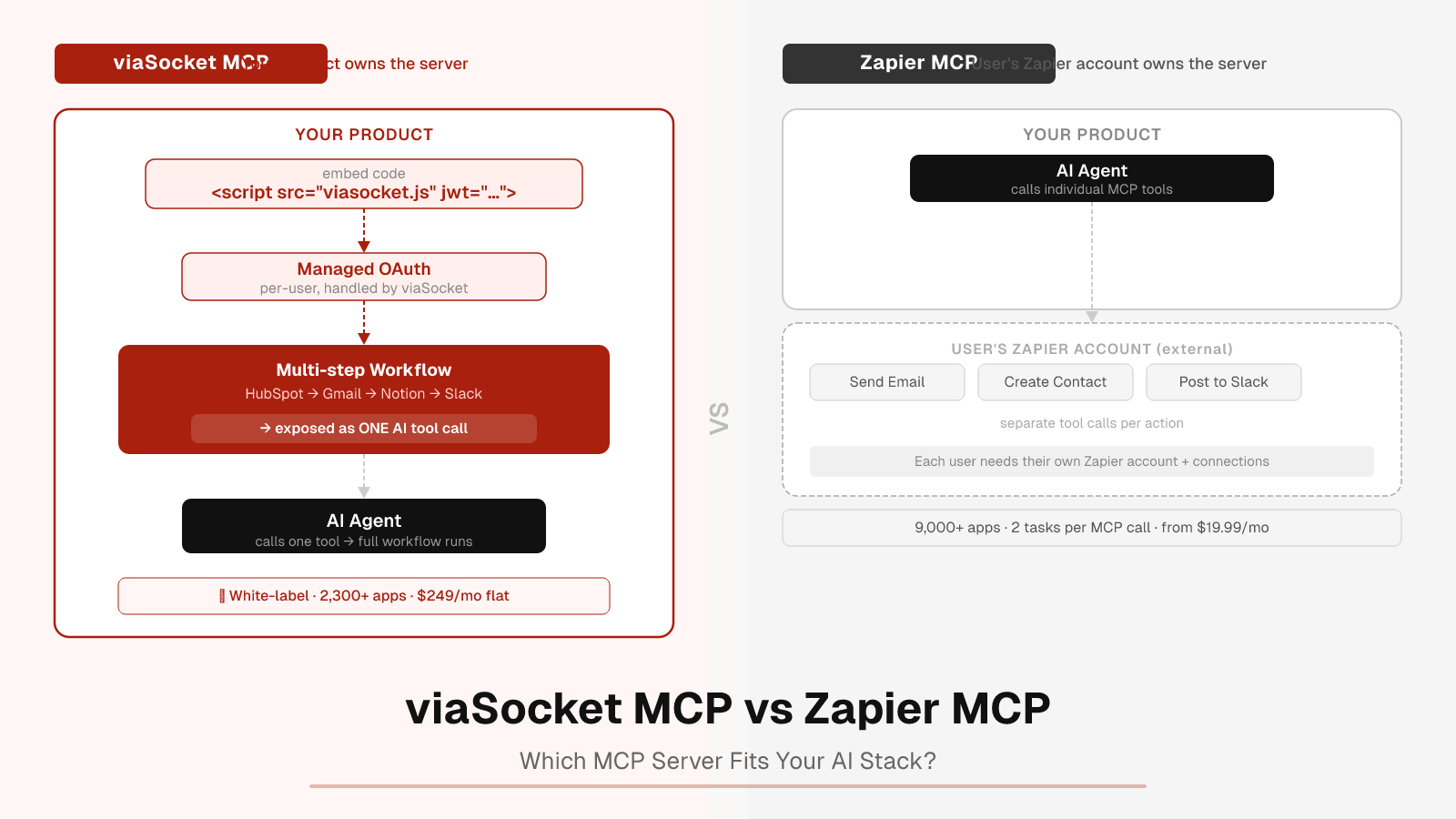
viaSocket MCP vs Zapier MCP — Which MCP Server Fits Your AI Stack?
A structured comparison of viaSocket MCP and Zapier MCP for developers and AI agent builders: app coverage, pricing, embedded use, white-label options, and setup complexity — with clear guidance on which fits your use case.
 By Abhijeet Singh

Browser Automation for AI Agents: How to Act on Sites That Have No API
A practical guide for developers building AI agents that need to act on websites with no public API. Covers when to use browser actions vs API calls, per-user isolation, monitoring, and how viaSocket manages browser automation as part of a broader agent tool stack.By Abhijeet SinghRead article →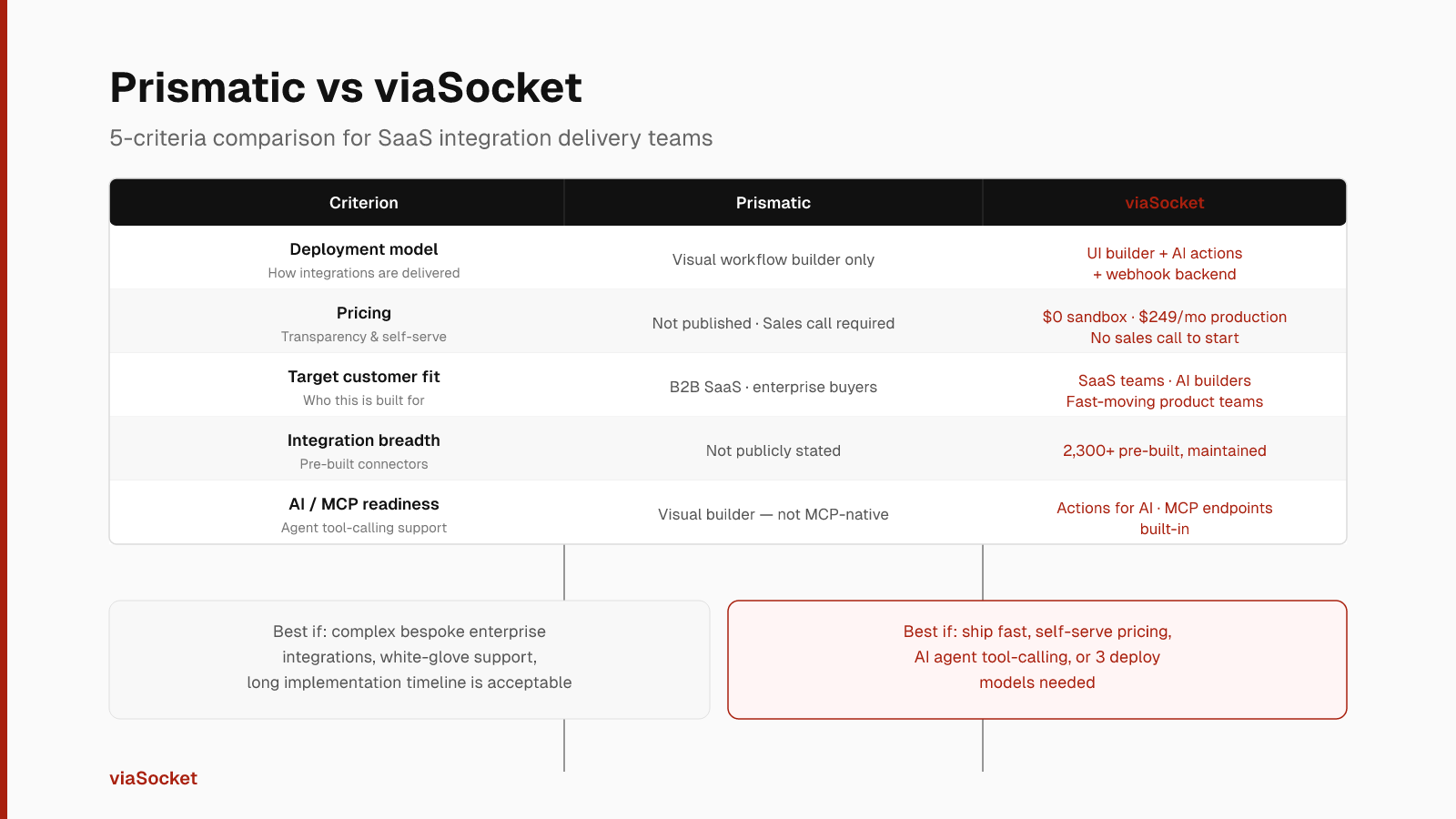
Prismatic Alternative: viaSocket vs Prismatic for SaaS Integration Delivery
Evaluating Prismatic alternatives? This comparison covers viaSocket vs Prismatic across five criteria — deployment model, pricing, integration breadth, target customer fit, and AI/MCP readiness — to help SaaS teams make a grounded choice.By Abhijeet SinghRead article →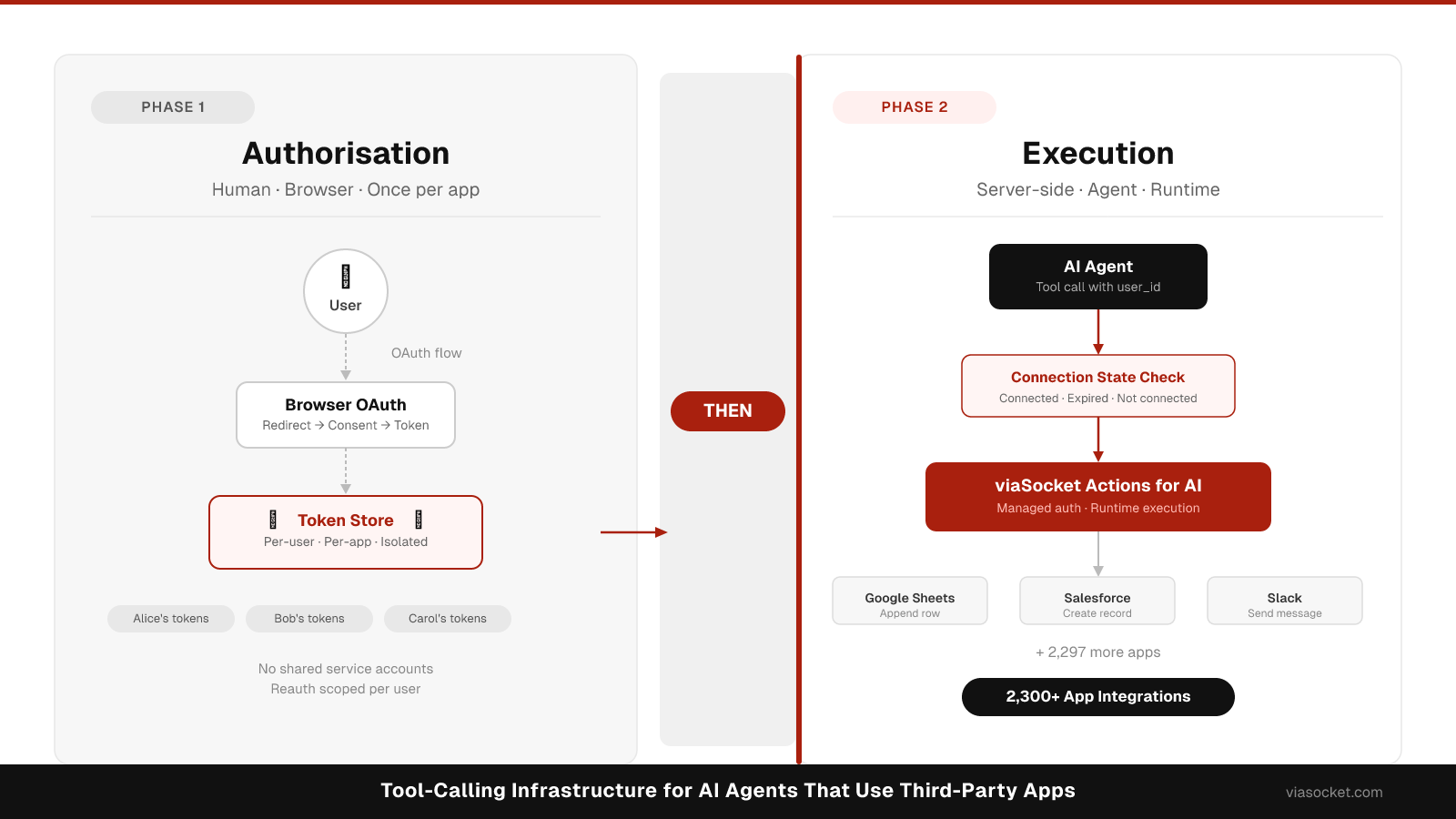
Tool-Calling Infrastructure for AI Agents That Use Third-Party Apps
The right tool-calling infrastructure for AI agents that use third-party apps requires per-user OAuth, runtime action execution, and connection state management. Here is how to build it.By Abhijeet SinghRead article →Which Integration Platform Supports the Most Apps for AI Agents?
A developer's comparison of integration platforms for AI agents — viaSocket (2,300+ apps), Pipedream Connect (3,000+ APIs), Composio (1,660 toolkits), and Workato (17,000+ enterprise connectors) — covering what the counts mean, why category matters, and how to pick the right platform for your agent.By Abhijeet SinghRead article →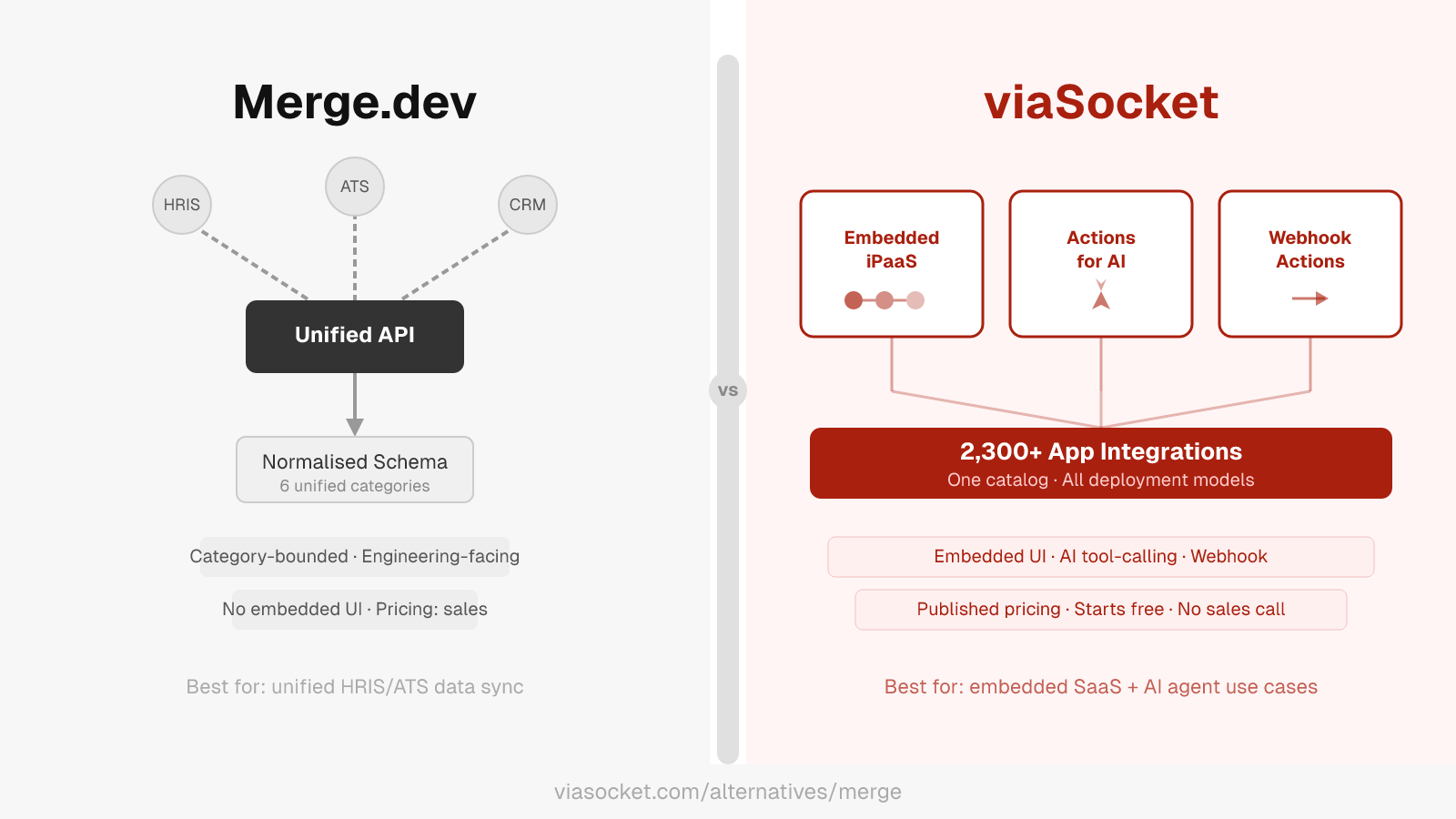
Best Merge.dev Alternatives for Developer-Facing Integration Infrastructure
Merge.dev is built for unified data models across HRIS, ATS, and CRM. If you need embedded integration UI, AI agent tool-calling, or full API access without schema constraints, here are the best alternatives.By Abhijeet SinghRead article →Best Nango Alternatives for API Auth and Embedded Integration Infrastructure
Nango handles managed OAuth for 1,000+ APIs. If you need embedded integration UI for your SaaS users, AI agent tool-calling, or broader app coverage, here are the best alternatives.By Abhijeet SinghRead article →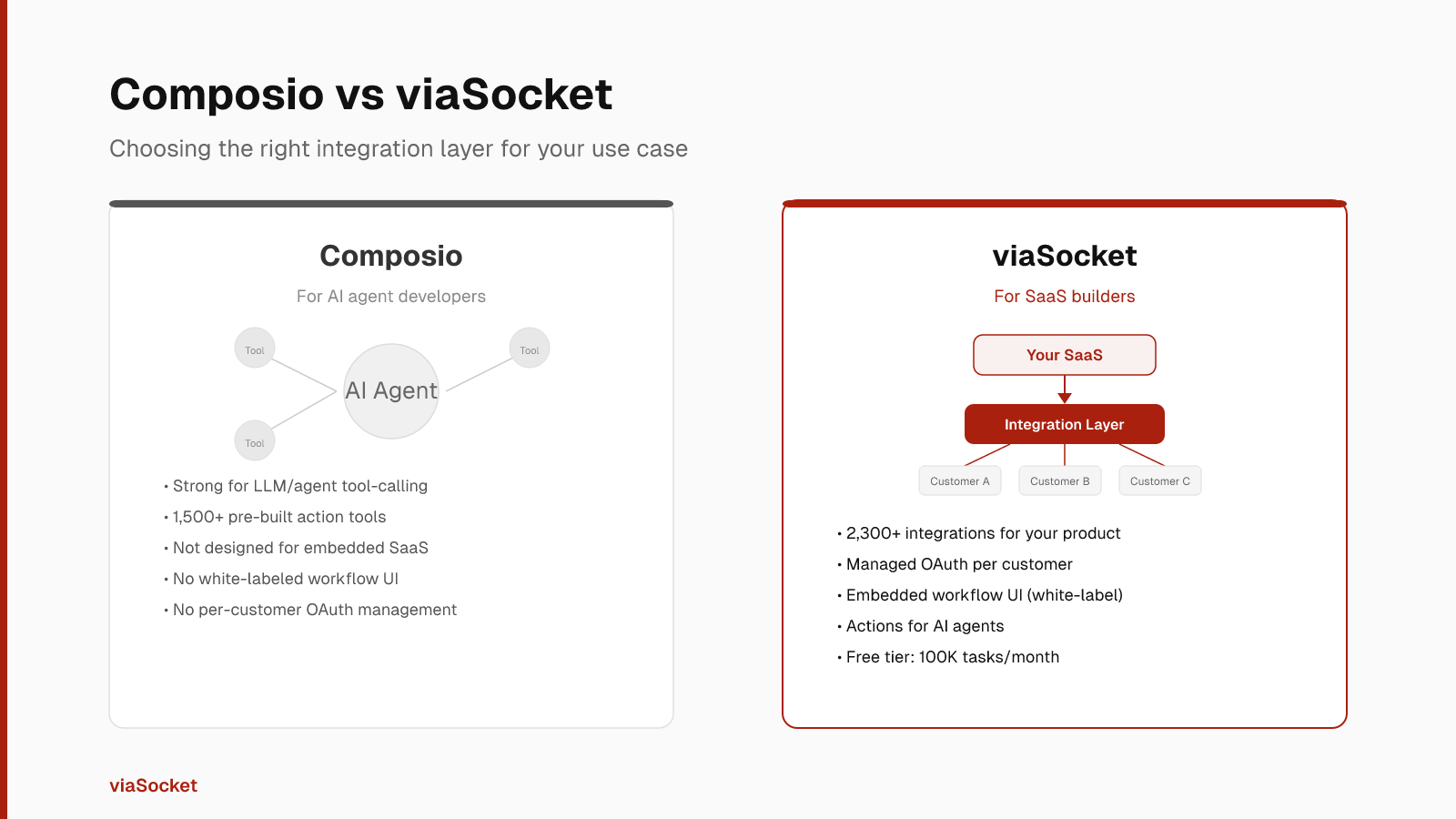
Composio Alternative: Why SaaS Builders Choose viaSocket for AI Agent Tool-Calling
Looking for a Composio alternative? This comparison covers viaSocket vs Composio across deployment model, pricing, integration breadth, and AI/MCP readiness — for SaaS builders and AI agent developers choosing integration infrastructure.By Abhijeet SinghRead article →Embedded iPaaS Comparison: viaSocket vs Paragon vs Prismatic vs Composio
A detailed comparison of the top embedded iPaaS platforms — viaSocket, Paragon, Prismatic, and Composio — covering app count, pricing, MCP support, AI agent tool-calling, and embed options.By Abhijeet SinghRead article →How to Add Managed OAuth for Third-Party Apps to Your Product
Learn how to add managed OAuth for third-party apps to your SaaS product using viaSocket's managed auth layer — JWT signing, SDK setup, per-user credential isolation, and action execution across 2,300+ apps.By Abhijeet SinghRead article →How to Handle OAuth for an AI Agent Acting on a User's Apps
An AI agent acting on a user's apps needs managed OAuth that stores credentials per user and scopes every action to the right tokens. This guide covers the correct architecture, implementation steps with viaSocket, and how to handle re-authorisation when tokens expire.By Abhijeet SinghRead article →How to Handle OAuth for Multi-Tenant SaaS Integrations with viaSocket
Most SaaS products need dozens of third-party integrations, each with its own OAuth flow, token storage, and per-tenant credential isolation. This guide explains how viaSocket's managed OAuth layer handles all of that, and how to wire it into your backend correctly using JWT and the viasocket-apps SDK.By Abhijeet SinghRead article →Multi-Tenant Integration Architecture: How to Build SaaS Integrations That Scale
Building integrations into a multi-tenant SaaS product requires credential isolation, per-user routing, and a connection lifecycle that scales with your user base. This guide covers the architecture patterns that keep one tenant's data separate from another's, using viaSocket's Integration Layer as the implementation reference.By Abhijeet SinghRead article →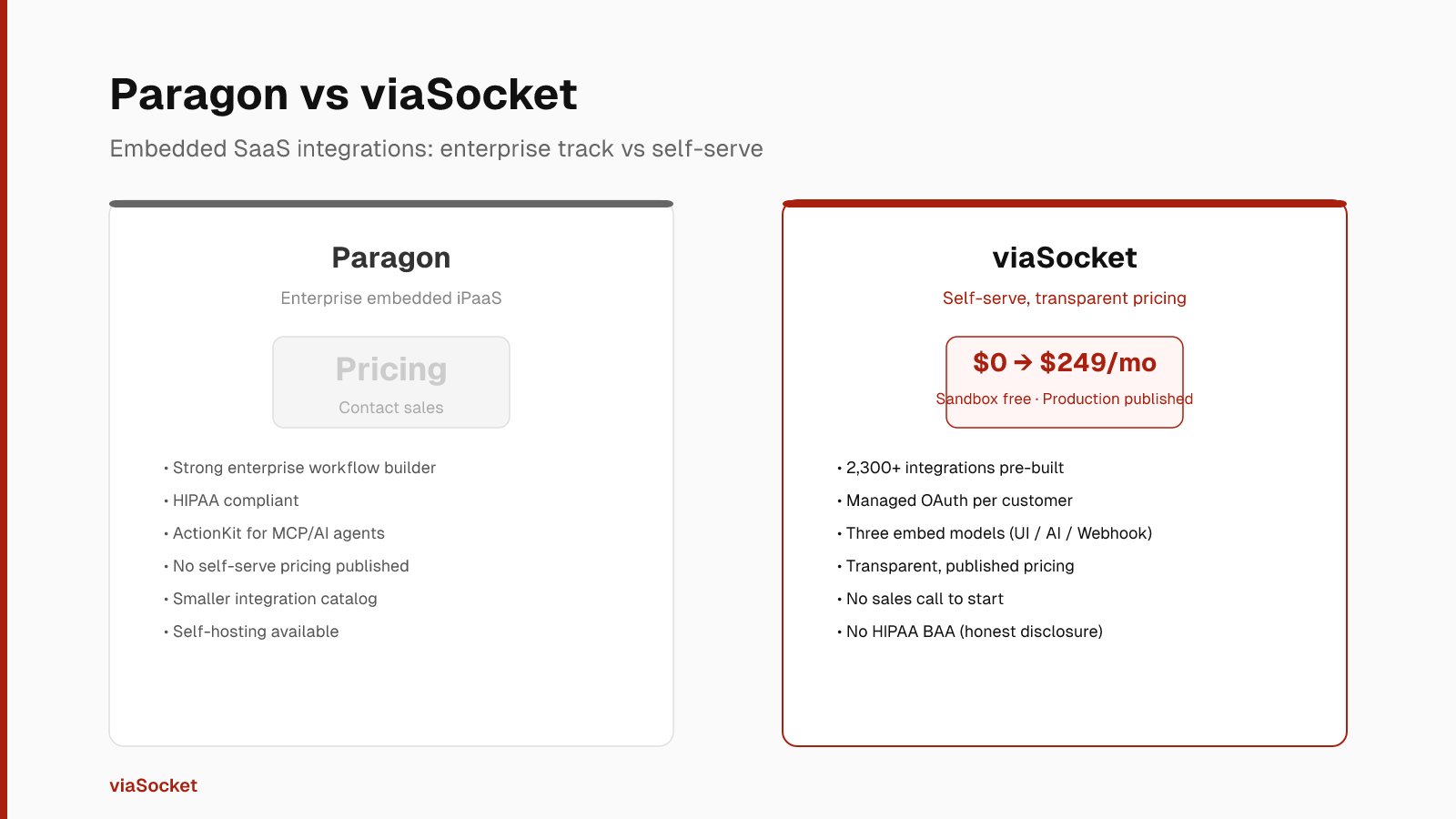
Paragon Alternative: viaSocket vs Paragon for Embedded SaaS Integrations
Looking for a Paragon alternative? This comparison covers viaSocket vs Paragon across deployment model, pricing transparency, integration breadth, AI/MCP readiness, and compliance — including an honest disclosure of where Paragon's HIPAA and self-hosting give it a genuine advantage.By Abhijeet SinghRead article →Webhook Triggers in viaSocket: Technical Implementation Guide
A technical guide to receiving and processing inbound webhooks in viaSocket: how to configure a webhook trigger, retrieve your endpoint URL, validate payloads, and build reliable event-driven workflows.By Abhijeet SinghRead article →Webhook-to-Multi-App Actions: Technical Guide to viaSocket Embed via Webhook
A technical implementation guide to viaSocket's Actions via Webhook embed product: how to generate per-user webhook URLs with JWT signing, POST events from your backend, and trigger multi-app workflows across 2,300+ connected apps.By Abhijeet SinghRead article →What Is MCP (Model Context Protocol)? How It Works and Why Developers Use It
An in-depth explanation of the Model Context Protocol (MCP): how it works, why developers adopt it, and where it fits alongside viaSocket's Integration Layer and embeds.By Abhijeet SinghRead article →White-Label MCP Server for SaaS: Ship Native AI Agent Support in Days
Launch a white-label MCP server for your SaaS to power native AI agent tool-calling in days. Architecture, deployment model, and how viaSocket fits.By Abhijeet SinghRead article →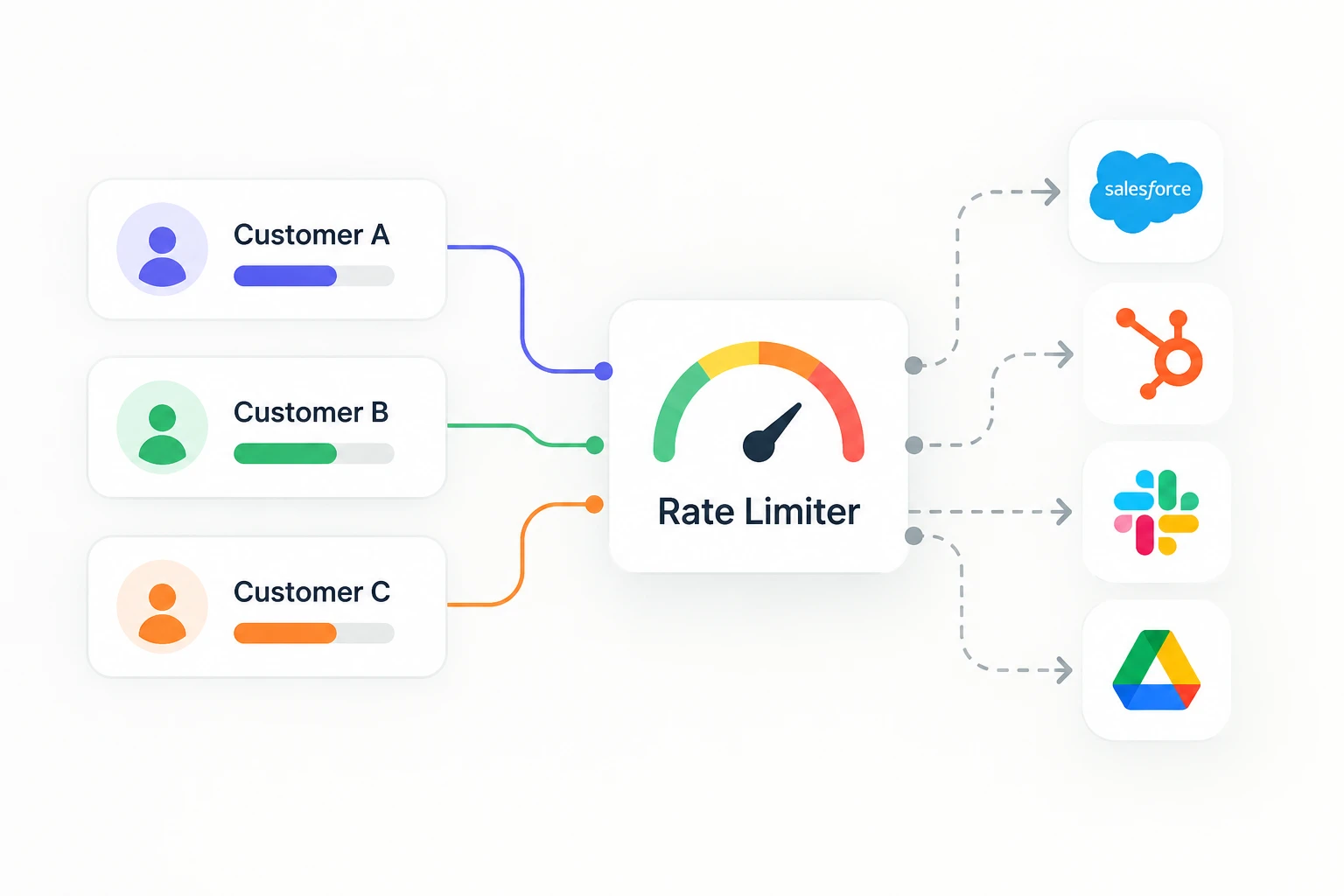
API Rate Limiting for Multi-Tenant Integrations
In a multi-tenant product, rate limiting stops being "catch the 429 and back off" and becomes a resource-allocation problem. How to track and enforce limits per tenant, not just per provider.By Abhijeet SinghRead article →